
Bil-Jac, founded in 1947 is a family-owned pet food brand. It positions itself as a heritage brand. It highlight slow-cooking methods claimed to preserve nutrients. The product range is broad, spanning different breed sizes and life stages. However, there are important nutritional factors that deserve closer scrutiny. Let’s examine the strengths and weaknesses of the formulas.
- Fresh meat as #1 ingredient: named meats lead the panels, providing high digestibility and complete amino profiles
- Good animal protein percentage (70%+): superior biological value compared to plant proteins
- Multiple protein sources: fresh meat, organ meats, and named meals broaden amino acid coverage
- Appropriate fat levels for adults (12-18%): supports maintenance energy without excess
- Chelated minerals: improved bioavailability versus purely inorganic forms
- Probiotic supplementation: Lactobacillus and Bifidobacterium strains for digestive health
- Joint support ingredients: glucosamine and chondroitin for mobility
- Known manufacturing locations: made in the USA
- Gentle cooking methods (slow-cooked): may preserve nutrients better than high-heat extrusion
- Low protein content (<25%): several recipes (e.g., senior, some adult) fall below optimal levels
- Low protein-to-calorie ratio (<70): insufficient protein density for optimal nutrition
- High carbohydrate content (>35%): frequently above optimal range, diluting protein density
- High-glycemic ingredients: corn, wheat, or rice appear high in several ingredient lists
- Missing mineral data: calcium, phosphorus, and ash often not fully disclosed
- Poor protein-to-phosphorus ratio (<30): indicates lower protein quality relative to mineral load
- Inorganic mineral forms: reliance on sodium selenite vs selenium yeast
- Controversial preservatives: BHA used instead of natural mixed tocopherols
- Senior formulas with low protein: questionnable approach that may not prevent sarcopenia risk
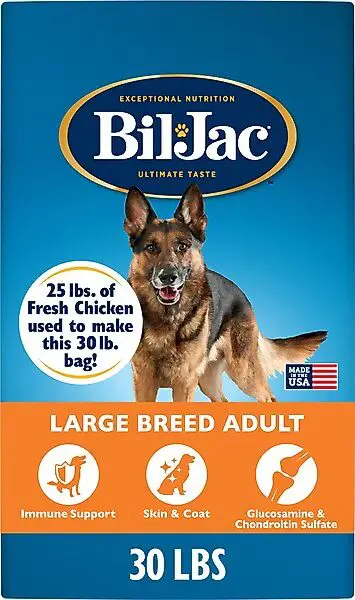
Bil-Jac Large Breed Adult Chicken

42/100
Fat content: 🟢 16%
Ash content: Unknown
Fiber content: 🟢 4%
Moisture content: 🟢 10%
Calcium content: 🟠 1.35%
Phosphorus content: 🟢 1.11%
Metabolizable energy: 4011 kcal/kg
Omega-3 content: 0.25%
Omega-6 content: 2.5%
Carbohydrate content: 🔴 37%
Protein-to-calorie ratio: 57
Calcium-to-phosphorus ratio: 🟢 1.22
Animal protein content: 🟢 70–90%
High glycemic index ingredients: 🟢 None
Corn/wheat/soy content: 🟠 Moderate use
Chelated minerals: 🟠 Mix
This large-breed formula starts with fresh chicken, which helps with taste and provides a decent base of animal protein. Still, at 23% protein, it feels light, especially for dogs that are more active. Research increasingly points toward a range closer to 28–32% for optimal maintenance of lean mass, so this level comes across as outdated and insufficient. The situation is compounded by the fact that not all protein here is animal-based—there’s a share of vegetable protein, and the exact contribution isn’t disclosed, even if animal proteins do seem to dominate overall.
Fat sits at 16%, which is fairly correct, though one could imagine going slightly lower if the protein was pushed higher to balance things out. The bigger concern is mineral transparency. On the guaranteed analysis, there’s no calcium or phosphorus data provided, and you actually have to go to Chewy’s Q&A section to find it. There, the values are reported as 1.35% calcium and 1.11% phosphorus, giving a Ca:P ratio a bit on the high side for a large-breed diet. Combined with modest protein, this suggests more “bony” or cartilaginous material in the mix, which isn’t ideal.
Omega-3 is another weak spot. At just 0.25%, it’s too low to provide meaningful anti-inflammatory support, and considering oxidation once the bag is opened, this number becomes even less relevant in practice. Finally, the presence of BHA as a preservative continues to raise questions. It remains legally permitted and technically safe within regulated limits, but many owners would prefer to avoid it in favor of natural antioxidants.
Overall, the recipe has some positive aspects the slow-cooked process, the inclusion of chicken as the first ingredient, and joint-support compounds from natural sources, but the shortcomings in protein density, mineral disclosure, omega-3 content, and preservative choice weigh heavily against it. For an active large-breed adult, this formula simply doesn’t bring enough to the table.
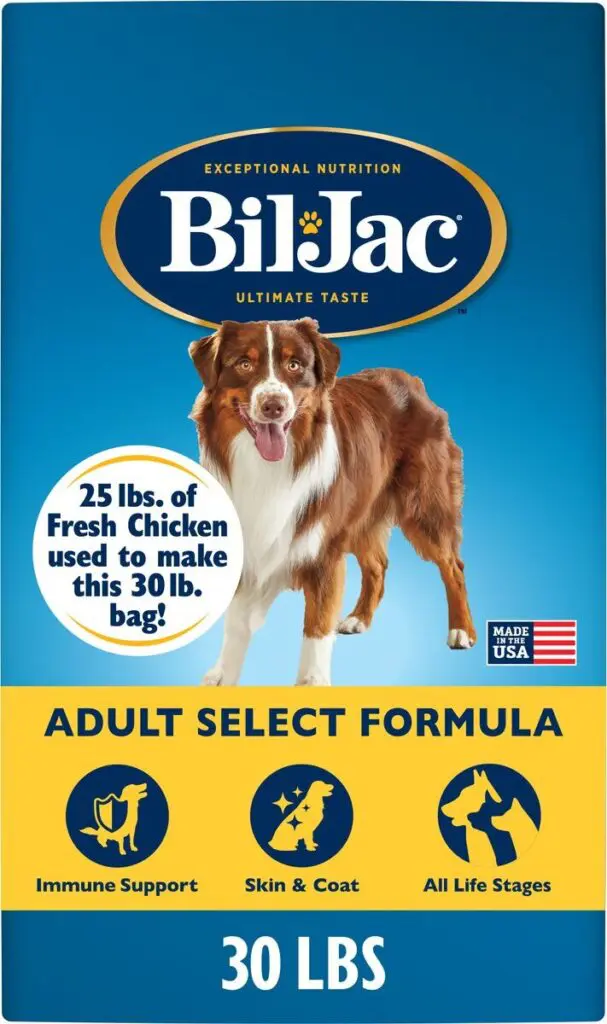
Bil-Jac Adult Select Chicken
47/100
Fat content: 🟢 18%
Ash content: Unknown
Fiber content: 🟢 4%
Moisture content: 🟢 10%
Calcium content: 🟠 1.38%
Phosphorus content: 🟢 1.00%
Metabolizable energy: 4110 kcal/kg
Omega-3 content: 0.25%
Omega-6 content: 2.5%
Carbohydrate content: 🟠 31%
Protein-to-calorie ratio: 66
Calcium-to-phosphorus ratio: 🟢 1.38
Animal protein content: 🟢 70–90%
High glycemic index ingredients: 🟢 None
Corn/wheat/soy content: 🟠 Moderate use
Chelated minerals: 🟠 Mix
Macronutrients. This formula targets large-breed adults with a reduced protein (23.3%) and moderate fat (14.8%) approach, on the assumption that bigger dogs meet protein needs via higher food volume. While common, the cutback feels too aggressive: controlled work shows whole-body protein turnover in dogs is maximized around ~32% dietary protein, in both young and aged adults implying many large breeds would benefit from a higher level to better preserve lean mass (Williams et al., 2001: J. Anim. Sci.; https://www.researchgate.net/publication/11548880).
Minerals. Calcium 1.54% and phosphorus 1.04% yield a Ca:P of 1.48. Although the ratio is barely within the acceptable band, the absolute calcium is high for a large-breed adult maintenance diet; ~1.2–1.3% Ca would be more appropriate.
Ingredient splitting. The formula lists peas in multiple fractions: peas, pea starch, pea flour, a textbook case of ingredient splitting that effectively boosts plant-protein share and can dilute animal-protein density relative to the headline lamb meal. In practice, such profiles often lean on synthetic amino acids to complete the amino acid pattern, lower-quality formulation strategy versus prioritizing meat-forward protein. This matters for big dogs, where high-quality animal protein supports muscle while calories are managed.
Verdict. Between reduced animal-protein intensity, elevated calcium, and heavy pea splitting, this recipe underdelivers for large-breed needs. It reads more like a calorie-control kibble than a truly muscle- and joint-supportive large-breed formula.
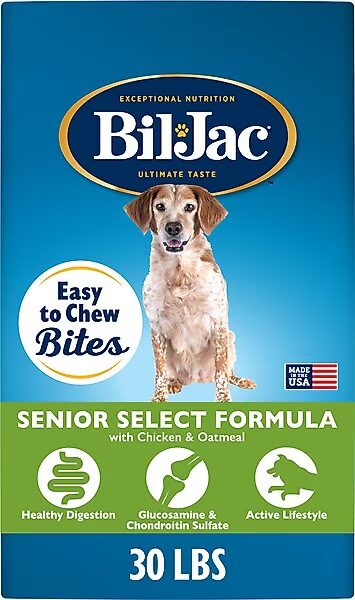
Bil-Jac Senior
35/100
Fat content: 🟢 12.5%
Ash content: Unknown
Fiber content: 🟠 5%
Moisture content: 🟢 10%
Calcium content: Unknown
Phosphorus content: 🟢 0.90%
Metabolizable energy: 3633 kcal/kg
Omega-3 content: 0.20%
Omega-6 content: 2.1%
Carbohydrate content: 🔴 45.5%
Protein-to-calorie ratio: 47
Calcium-to-phosphorus ratio: Unknown
Animal protein content: 🟢 70–90%
High glycemic index ingredients: 🟢 None
Corn/wheat/soy content: 🟠 Moderate use
Chelated minerals: 🟠 Mix
This senior formula contradicts with canine aging research (here and here). At just 17% protein, it dramatically short of senior dogs’ actual needs for muscle mass preservation. The 45.5% carbohydrate content ranks among the highest we’ve evaluated, likely promoting unwanted weight gain.
The protein-to-calorie ratio of 47 indicates potential protein inadequacy for any life stage. While the easier-to-chew kibble addresses mechanical feeding challenges, dogs with medical conditions, especially seniors, may have very different requirements. In such cases, it is best to consult a veterinarian to evaluate the dog’s actual needs, including body weight and muscle condition.
Positive elements include controlled phosphorus at 0.9% and joint-supporting compounds (we didn’t find the calcium content). The probiotic blend supports digestive health during a vulnerable life stage.The continued use of BHA preservative adds chemical exposure concerns.
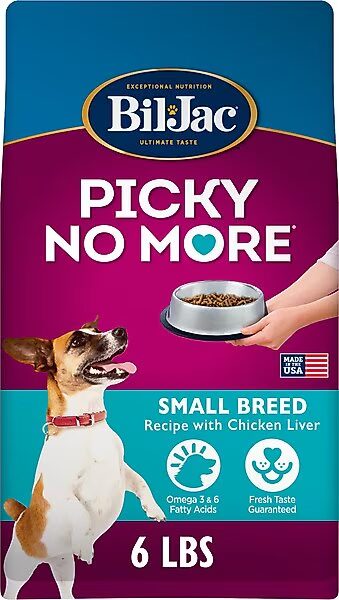
Bil-Jac Picky No More Small Breed Chicken Liver
40/100
Fat content: 🟢 15%
Ash content: Unknown
Fiber content: 🟢 4%
Moisture content: 🟢 10%
Calcium content: Unknown
Phosphorus content: 🟢 1.38%
Metabolizable energy: 3970 kcal/kg
Omega-3 content: 0.25%
Omega-6 content: 2.5%
Carbohydrate content: 🔴 35%
Protein-to-calorie ratio: 65
Calcium-to-phosphorus ratio: Unknown
Animal protein content: 🟢 70–90%
High glycemic index ingredients: 🟢 None
Corn/wheat/soy content: 🟠 Moderate use
Chelated minerals: 🟠 Mix
This formula tries to solve the problem of picky appetites by leaning on chicken liver, which certainly boosts palatability and provides a dense source of B vitamins and iron. Protein sits at 26 %, with a protein-to-calorie ratio of about 65, which looks borderline adequate at first glance. But here’s where the context matters: small breeds have much higher metabolic rates per pound of body weight than large breeds, while at the same time consuming fewer calories overall. That combination means they need a higher nutrient density, particularly in protein, so every bite covers more of their requirements. In that light, 26 % protein quickly feels insufficient.
Carbohydrate content around 35 % further dilutes the amino acid density, which is not ideal for toy breeds prone to blood sugar fluctuations.. But as with the rest of the Bil-Jac line, the mineral data is incomplete: calcium levels aren’t disclosedand the use of BHA as a preservative remains a concern.
Our Opinion
Bil-Jac is a heritage kibble with one great strength: cooking method. Also, dogs like it. Fresh meat often leads, and that sets it apart from entry-level grocery brands. Still, the formulas raise questions. Protein levels are modest in several recipes. Corn play a larger role than in premium kibbles. Mineral balance isn’t always clear.
Premium dry food competitors focus on concentrated animal proteins, clear sourcing, and even gentler cooking methods. Air-dried and freeze-dried brands like Instinct and A Pup Above offer these features..
