

NutriSource, founded in 1964 and family-owned for several generations. The brand positions itself as a brand built on tradition and accessibility. Its core promise is to deliver balanced nutrition at an affordable price. The product line is diverse, covering multiple protein sources and life stages, and all formulas are free from corn, wheat, and soy. Still, there are important aspects to consider so let’s take a closer look at the strengths and weaknesses of this brand.
- Fresh meat leads all formulas: Deboned chicken, turkey, lamb, salmon, duck consistently listed first
- No corn, wheat, or soy: All recipes avoid common problematic grains and fillers
- Probiotic supplementation: Five bacterial strains included across formulas for digestive health
- AAFCO compliance: All recipes meet nutritional adequacy standards for stated life stages
- Variety of protein sources: options for dogs with common protein allergies
- Natural preservatives: Mixed tocopherols used instead of chemical preservatives
- Taurine supplementation in grain-free formulas addressing DCM concerns
- Consistently high carbohydrate content: 6 out of 13 recipes exceed 35% carbohydrates, well above optimal range
- Ingredient splitting: some recipes contain a lot of plant proteins, with peas split across multiple forms.
- Limited sourcing transparency: No disclosure of ingredient origins or processing facilities
- Not Human-Grade Meat: Ingredients not explicitly labeled as human-grade.
- Excessive calcium and phosphorus in multiple recipes (Senior: 1.75% Ca, 1.35% P; Puppy: 1.93% Ca) unsuitable for seniors and risky for large-breed puppies.
- High ash content (8%+) in some formulas, suggesting heavy mineral load or lower protein quality.
- Animal protein low sometimes
- Carbohydrates frequently above 35%
- Reliance on extrusion cooking means multiple high-heat steps, reducing natural nutrient retention and requiring heavy supplementation
Nutrisource Adult Chicken & Rice Recipe
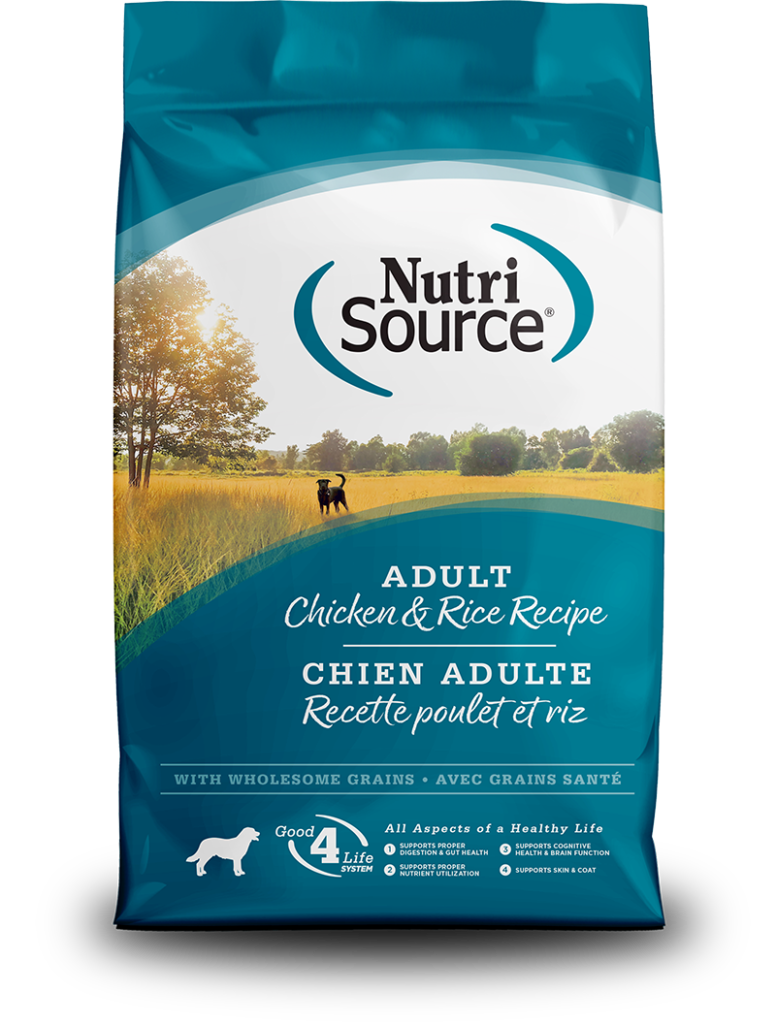

53/100
Fat content: 🟢 16,5%
Ash content: 🟢 6,77%
Fiber content: 🟢 3,5%
Moisture content: 🟢 9,5%
Calcium content: 🟢 1.54%
Phosphorus content: 🟢 1,14%
Metabolizable energy: 🟢 4020 kcal/kg
Omega‑3 content: 🟠 0,7%
Omega‑6 content: 🟢 2,6%
Carbohydrate content: 🟠 37,73%
Protein‑to‑calorie ratio: 🔴 65
Calcium‑to‑phosphorus ratio: 🟢 1.35
Animal protein content: 🟠 60-70%
High‑glycemic ingredients: 🟢 None
Corn/wheat/soy content: 🟢 No
Chelated minerals: 🟢 Mix
The adult formula presents a mixed bag nutritionally. Crude protein sits at 26% (which remains satisfactory for mainstream kibble). Though the PCR (Protein-to-calorie ratio) of 65 falls short of the optimal 80-110 range. This suggests the protein density won’t suffice for dogs with higher protein needs.
The good: Fresh chicken (>10%) enhances palatability, while the Ca/P ratio (Calcium/phosphorus) of 1.35:1 proves nearly impeccable for skeletal health. Mixed chelated minerals boost bioavailability compared to standard inorganic forms. No corn, wheat, or soy appears in the composition, which limits allergen exposure. Omega-3 levels reach 0.7%, contributing to coat sheen, and the omega-6/omega-3 ratio stays balanced at 3.71:1.
The regrettable: Carbohydrate content climbs to 37.73%, notably high for weight management. Despite dogs’ evolved ability to digest starches better than wolves (2), this level exceeds optimal ranges. The PPR (Protein-Phosphorus Ratio) of merely 23 suggests medium quality protein sources. Animal proteins comprise only 60-70% of total protein, meaning substantial plant protein dilution. The calcium and phosphorus contents are quite high and disqualify this recipe for aging dogs.
Verdict: This recipe suits sedentary companions but disappoints for active of old dogs. The elevated carbs may promote weight gain in couch potatoes.
Nutrisource NutriSource Senior Recipe
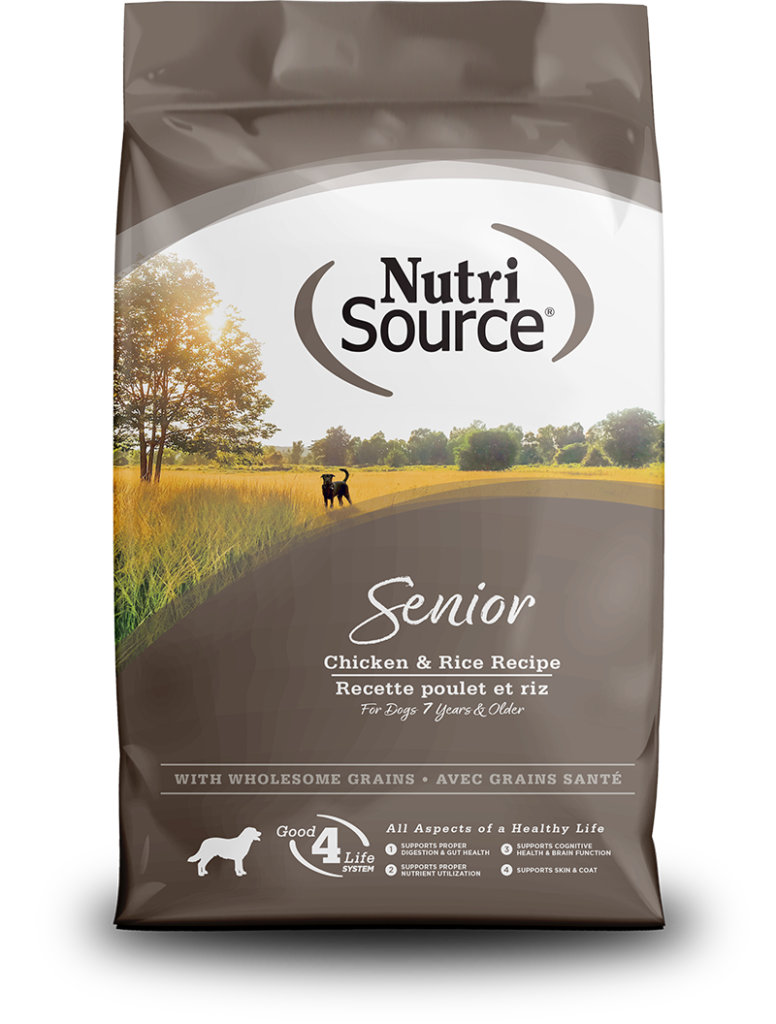

49/100
Fat content: 🟢 13%
Ash content: 🔴 8.41%
Fiber content: 🟢 3.44%
Moisture content: 🟢 9.5%
Calcium content: 🔴 1.75%
Phosphorus content: 🔴 1.35%
Metabolizable energy: 3776 kcal/kg
Omega-3 content: 0.5%
Omega-6 content: 1.8%
Carbohydrate content: 🔴 39.45%
Protein-to-calorie ratio: 69
Calcium-to-phosphorus ratio: 🟢 1.30
Animal protein content: 🟠 60–70%
High glycemic index ingredients: 🟢 None
Corn/wheat/soy content: 🟢 No
Chelated minerals: 🟠 Mix
Macronutrients. At 26% protein and 13% fat, the macronutrient profile looks balanced at first glance. Protein is set at a standard adult level, but it’s worth noting that senior dogs often need as much or even more protein than adults to help prevent sarcopenia (age-related muscle loss). While adequate, this level could have been pushed higher for better support of aging dogs.
Minerals & ash load. The real concern is the high calcium (1.75%) and phosphorus (1.35%) levels. Both are too high for a senior formula, where reduced mineral density is generally preferred to lower kidney stress. Coupled with an elevated ash content (8.4%), this recipe places a significant renal burden on older dogs. It’s an odd formulation choice, since most senior diets on the market aim to reduce calcium and phosphorus to protect aging kidneys.
Ingredients & proteins. The base of the formula is chicken with whole brown rice. While chicken is digestible and widely used, one could question its suitability for seniors: many dogs are exposed to chicken from an early age, and long-term overexposure may increase the risk of food sensitivities. Offering an alternative protein source would have been a welcome choice here.
Fatty acids. Omega-3 content is low, a missed opportunity given the established role of omega-3 fatty acids in supporting cognitive health and reducing inflammation in aging dogs. Increasing omega-3s (e.g., fish oil, marine sources) would have been a valuable improvement.
Other considerations. Like most kibbles, this recipe is produced through extrusion, which inevitably leads to a loss of heat-sensitive nutrients — partially compensated with added vitamins and supplements. Still, one could argue that aging dogs deserve a more natural, nutrient-preserving diet.
Bottom line. While the macronutrient balance is acceptable, the excessive calcium, phosphorus, and ash content make this recipe poorly adapted for senior dogs. Combined with limited omega-3 support and reliance on chicken as the main protein, this formula feels misaligned with the specific needs of older dogs.
NutriSource Small & Medium Breed Puppy
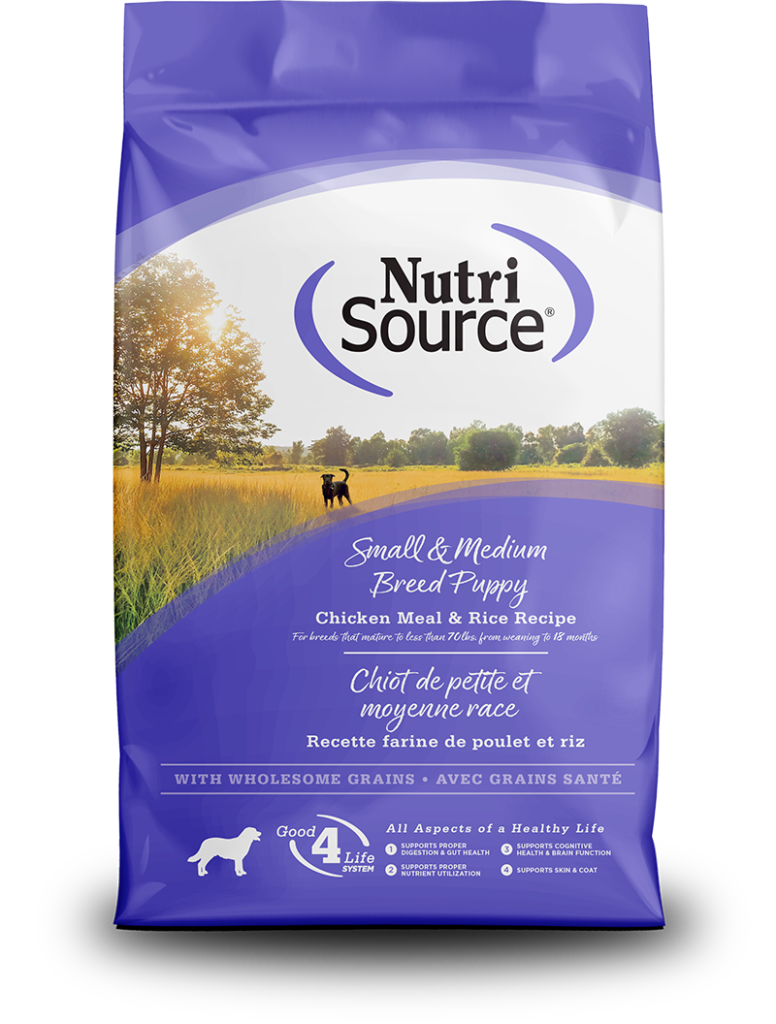
56/100
Fat content: 🟠 21%
Ash content: 🔴 8.93%
Fiber content: 🟢 4.06%
Moisture content: 🟢 9.5%
Calcium content: 🔴 1.93%
Phosphorus content: 🔴 1.32%
Metabolizable energy: 4151 kcal/kg
Omega-3 content: 1%
Omega-6 content: 3.8%
Carbohydrate content: 🟢 24.51%
Protein-to-calorie ratio: 77
Calcium-to-phosphorus ratio: 🔴 1.46
Animal protein content: 🟠 60–70%
High glycemic index ingredients: 🟢 None
Corn/wheat/soy content: 🟢 No
Chelated minerals: 🟠 Mix
Strong macronutrients meet concerning mineral levels in this growth formula. Protein at 32% and fat at 21% support development, yet the execution falters in critical areas.
Strengths: The Protein-to-calorie ratio of 77 indicates good protein density for growing bodies. Carbohydrates stay low at 24.51%, preventing rapid weight gain during development. ME reaches 4151 kcal/kg, meeting puppies’ high caloric needs efficiently. Omega-3 at 1% promotes cognitive development. The formula avoids grains entirely, limiting potential allergens.
Weaknesses: Calcium soars to 1.93%. It would be inappropriate for large-breed pups prone to developmental orthopedic disease, but this recipe is formulated for small and medium puppies. Ash content at 8.93% reveals not-so-good quality protein sources. Fiber at 4.06% seems excessive for sensitive puppy digestion.
NutrisourceLarge Breed Lamb Meal & Peas Recipe
44/100
Fat content: 🟢 14.8%
Ash content: 🟠 7.41%
Fiber content: 🟢 3.83%
Moisture content: 🟢 9.5%
Calcium content: 🔴 1.54%
Phosphorus content: 🟠 1.04%
Metabolizable energy: 3760 kcal/kg
Omega-3 content: 0.8%
Omega-6 content: 2.3%
Carbohydrate content: 🔴 41.13%
Protein-to-calorie ratio: 62
Calcium-to-phosphorus ratio: 🔴 1.48
Animal protein content: 🟠 60–70%
High glycemic index ingredients: 🟢 None
Corn/wheat/soy content: 🟢 No
Chelated minerals: 🟠 Mix
Macronutrients. This formula targets large-breed adults with a reduced protein (23.3%) and moderate fat (14.8%) approach, on the assumption that bigger dogs meet protein needs via higher food volume. While common, the cutback feels too aggressive: controlled work shows whole-body protein turnover in dogs is maximized around ~32% dietary protein, in both young and aged adults implying many large breeds would benefit from a higher level to better preserve lean mass (Williams et al., 2001: J. Anim. Sci.; https://www.researchgate.net/publication/11548880).
Minerals. Calcium 1.54% and phosphorus 1.04% yield a Ca:P of 1.48. Although the ratio is barely within the acceptable band, the absolute calcium is high for a large-breed adult maintenance diet; ~1.2–1.3% Ca would be more appropriate.
Ingredient splitting. The formula lists peas in multiple fractions: peas, pea starch, pea flour, a textbook case of ingredient splitting that effectively boosts plant-protein share and can dilute animal-protein density relative to the headline lamb meal. In practice, such profiles often lean on synthetic amino acids to complete the amino acid pattern, lower-quality formulation strategy versus prioritizing meat-forward protein. This matters for big dogs, where high-quality animal protein supports muscle while calories are managed.
Verdict. Between reduced animal-protein intensity, elevated calcium, and heavy pea splitting, this recipe underdelivers for large-breed needs. It reads more like a calorie-control kibble than a truly muscle- and joint-supportive large-breed formula.
Nutrisource Seafood Select Recipe
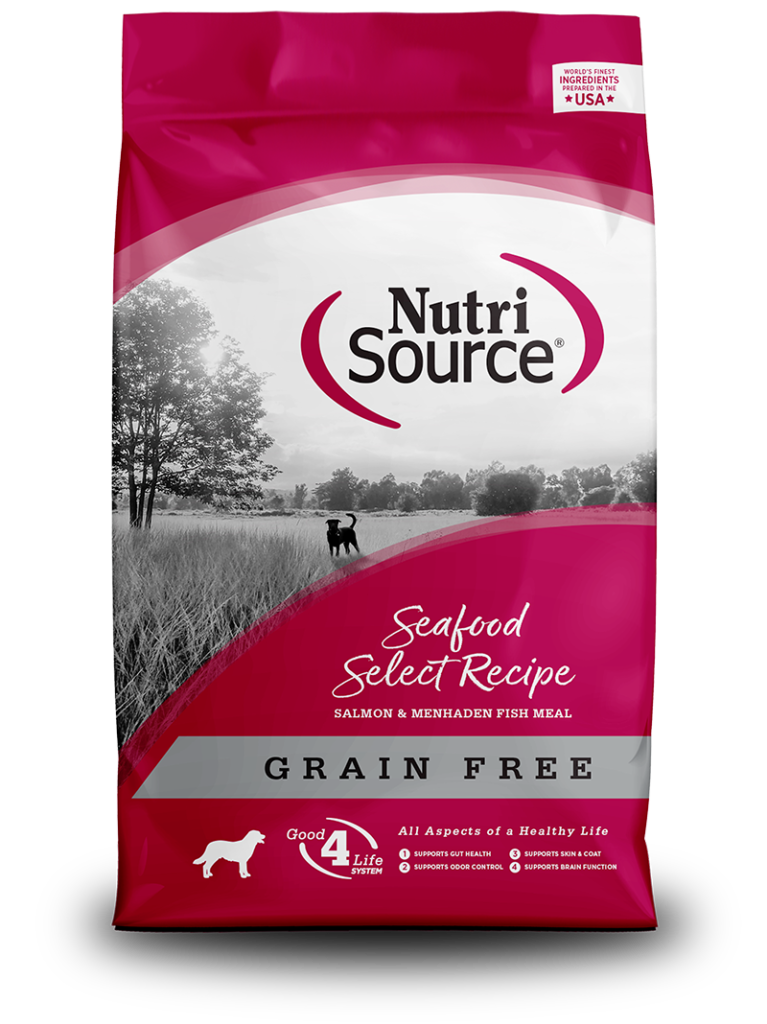
51/100
Fat content: 🟢 15.26%
Ash content: 🔴 8.47%
Fiber content: 🟢 5.81%
Moisture content: 🟢 9.5%
Calcium content: 🔴 1.49%
Phosphorus content: 🟠 1.12%
Metabolizable energy: 3812 kcal/kg
Omega-3 content: 1%
Omega-6 content: 2.3%
Carbohydrate content: 🔴 33.96%
Protein-to-calorie ratio: 71
Calcium-to-phosphorus ratio: 🟢 1.33
Animal protein content: 🔴 40–60%
High glycemic index ingredients: 🟢 None
Corn/wheat/soy content: 🟢 No
Chelated minerals: 🟠 Mix
This fish-based formula brings some welcome variety compared to NutriSource’s more common chicken recipes. Using salmon as the first ingredient is a positive move, especially for dogs that need a break from poultry proteins. At 27% protein, the recipe delivers a slightly higher level than other formulas in the line, and the calcium content (1.49%), while still high, is at least more moderate compared to some of NutriSource’s other recipes. The fiber level at 5.81% is notable and could help with stool consistency and satiety.
However, the same issues that plague other formulas in the brand resurface here. The recipe relies heavily on ingredient splitting of peas which artificially lowers their position on the ingredient list while still contributing a significant share of plant protein. Although salmon is listed first, the true dominance of peas raises questions about the actual animal-to-plant protein balance.
Another concern is the mineral profile. Phosphorus (1.12%) combined with calcium close to 1.5% and ash at 8.47% makes this formula unsuitable for older dogs or those with renal sensitivity. On top of that, the question of salmon sourcing remains open: farmed salmon often comes with lower nutrient density, frequent antibiotic use, and higher stress levels than wild salmon, and given the multiple high-heat processing steps in kibble production, much of the inherent nutritional value is likely lost.
In short, while this recipe offers a bit of variety and a stronger protein level, it suffers from the same weaknesses as the rest of the NutriSource range: ingredient splitting, high minerals, and reliance on additives to compensate for extrusion losses. It sits at a middle-of-the-road level in today’s kibble market.
Our Opinion
NutriSource positions itself as a mid-range kibble brand. There are positives (named meats, moderate protein, no corn/wheat/soy). However, recurring issues are easy to spot: ingredient splitting, mineral excess, high ash, and lack of transparency. The Senior and Large Breed formulas are particularly problematic, while Puppy and Adult Chicken & Rice are more balanced but still only average compared to premium competitors. Overall, NutriSource sits slightly above grocery-level kibbles (like Aldi) but below true high-quality brands.
By contrast, premium brands focus on higher-quality animal proteins, avoid formulation mistakes like excessive minerals, and emphasize ingredient sourcing transparency. They are not afraid to disclose the origin of their ingredients and often invest in gentler cooking methods. For example, air-dried processing preserves far more nutrients than extrusion, which involves repeated high-heat steps. Brands like A Pup above or Carna4 illustrate this premium positioning, with a stronger emphasis on both ingredient integrity and nutrient preservation.
